Wars and empires
The Mongol Empire
Founded in 1206, the Mongol Empire stayed unified until 1260, when its khanates became fully autonomous, and the Yuan dynasty ended in 1368.

At a glance
1206 to 1368
From Genghis Khan's accession to the end of the Yuan dynasty
4 khanates
Golden Horde, Ilkhanate, Chagatai and Yuan
10,000 men
Size the elite bodyguard grew to
about 100,000 men
Army used against Khwarazm from 1218
1260
Year the khanates became fully autonomous
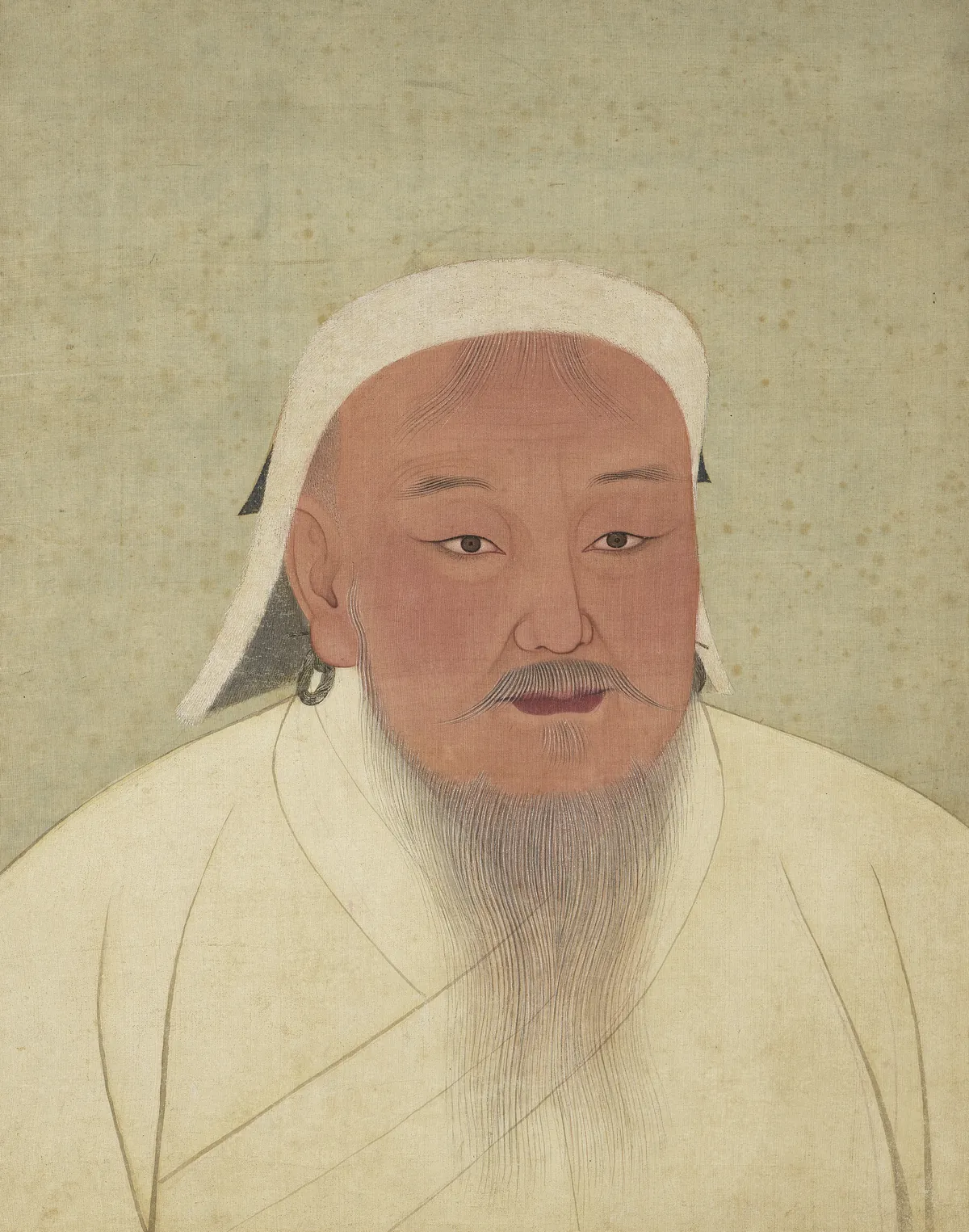
From Temujin to Genghis Khan
Temujin was born around 1162 or 1167, and scholars disagree on which.
In 1206 a confederation of Mongol tribes met at a kurultai on the Kerulen River and declared him leader with the title Genghis Khan.
The Mongol language had only been spoken before this period. It was written down using the script of the Uighur Turks.
Genghis Khan avoided the traditional tribe-based divisions, which could split along old rivalries.
His elite bodyguard, the kesikten, grew from 800 to about 10,000 men.
His law code, the Yasa, set out punishments for specific crimes.
Campaigns in China, Persia and Europe
Mongol attacks on the Jin state came in 1205, 1209 and 1211, and the 1211 invasion used two armies of 50,000 men each. The Jin state collapsed in 1234.
The invasion of the Khwarazm Empire began in 1218 with an army of about 100,000 men and captured Bukhara and Samarkand by 1220.
Genghis Khan died on 18 August 1227 while besieging Zhongxing, the capital of Western Xia.
His successor Ogedei was Great Khan from 1229 to 1241, and chose Karakorum as capital in 1235.
A Mongol force of about 150,000 men operated in Europe from 1236 to 1242, and Kiev fell on 6 December 1240.
The Abbasid Caliphate was conquered in 1258, with the sacking of Baghdad.
A capital on the grassland
Karakorum, in the Orkhon valley, was the capital of Genghis Khan's empire during the 13th and 14th centuries.
The Orkhon valley cultural landscape covers about 121,967 hectares of pasture on both banks of the Orkhon river and is still grazed by nomadic herders.
The remains there reflect the links between nomadic pastoral societies and their administrative and religious centres.
Four khanates
The empire stayed unified until 1260, when the khanates became fully autonomous.
The Golden Horde was founded around 1227 by Batu Khan and formally ended in 1480.
The Ilkhanate was founded around 1260 by Hulegu and broke apart in 1335 after dynastic disputes.
The Chagatai Khanate lasted from around 1227 to 1363.
Kublai Khan ruled from 1260 to 1294 and declared himself emperor of China in 1271, founding the Yuan dynasty, which lasted until 1368.
The Song capital Lin'an fell on 28 March 1276, and the naval battle at Yaishan was fought on 19 March 1279.
Mongol invasions of Japan came in 1274 and again in 1281.
The summer capital Xanadu was abandoned in 1430.
Sources
- World History Encyclopedia, Mongol Empire
- World History Encyclopedia, Genghis Khan
- UNESCO World Heritage Centre, Orkhon Valley Cultural Landscape