Animals and nature
Camels
A camel's hump holds fat, up to about 36 kg of it, and a thirsty dromedary can drink up to about 100 litres in one visit to a well.
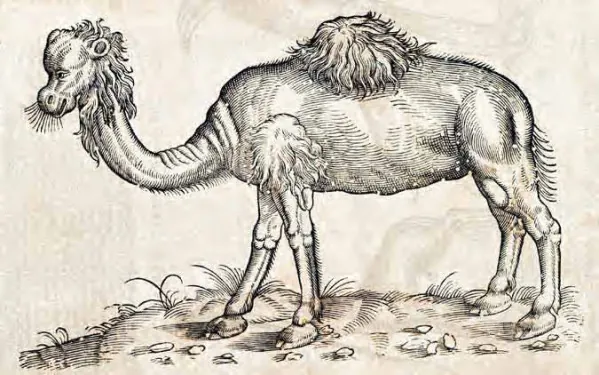

At a glance
36 kg
Most fat a hump can hold (80 pounds)
100 litres
Most water a thirsty camel can drink in one visit
34 to 41.7 °C
Daily range of a dromedary's body temperature
370 to 440 days
Dromedary pregnancy
40 km
Distance a loaded camel can cover in a day, at most (25 miles)
What the hump really holds
A camel's hump stores fat, not water. There is no evidence that camels keep water in reserve anywhere in their bodies for long periods.
A single hump can hold up to 80 pounds (about 36 kg) of fat, which the camel can turn into energy and water when food is scarce.
As the fat is used up, an empty hump flops over like a deflated balloon until the camel has eaten enough to fill it again.
Camel calves are not born with fat deposits. Their humps start to form when they are about 10 months to a year old.
Dromedary camels have one hump and Bactrian camels have two.
Camel calves begin to wean when they are 4 to 6 months old, well before their humps start to form.
Drinking after a long dry spell
A very thirsty camel can drink up to about 100 litres at a single visit to a well, taking roughly 10 to 13 minutes.
After reaching water, a camel's red blood cells may swell to more than twice their normal size.
Their fur limits sweating, and their blood cells stay small enough to keep circulating as the blood thickens.
A dromedary's body temperature swings between 34 °C and 41.7 °C over a day, which helps it conserve water.
Built for sand and long marches
Camels have two rows of long lashes to protect their eyes from blowing sand, and they can shut their nostrils in sandstorms.
Dromedary males stand 1.8 to 2.0 m at the shoulder and weigh 400 to 600 kg.
Loaded camels can cover up to 25 miles (about 40 km) a day.
Two species and 3,500 years with people
Estimates put the domestication of camels at about 3,500 to 4,000 years ago.
Dromedaries live mainly in northern Africa and southwestern Asia, and feral herds persist in central Australia, where the species was introduced.
Bactrian camels live in parts of western China and Central Asia.
Wild Bactrian camels are critically endangered, while domestic Bactrians are not listed as endangered.
Wild and domestic Bactrian camels differ genetically by about 3 percent.
Calves, breeding and grazing
A dromedary pregnancy lasts 370 to 440 days and usually produces one calf.
Female dromedaries mature at about 3 years old and males at about 6.
A dromedary spends about 8 to 12 hours a day grazing and an equal time ruminating.
Sources
- National Geographic, Dromedary camel facts
- EarthSky, Do camels store water in their humps?
- Cleveland Zoological Society, Truth or tail: a camel's hump
- Live Science, Do camels really have water in their humps?
- University of Michigan Museum of Zoology, Camelus dromedarius, Animal Diversity Web
- University of Michigan Museum of Zoology, Camelus bactrianus, Animal Diversity Web
- Live Science, Camels: facts, types and pictures