Engineering
The Eiffel Tower
Built in two years, two months and five days from 18,038 iron parts and 2.5 million rivets, the tower grows in the heat of the sun.

At a glance
18,038 parts
Metal parts in the structure
2.5 million rivets
Rivets used, about a third of them fitted on site
7,300 tonnes
Iron in the tower
60 tonnes
Paint used
2 years, 2 months, 5 days
Length of the build, ending 31 March 1889
A tower for the 1889 World's Fair
The tower was built for the 1889 Exposition Universelle, the World's Fair that marked 100 years since the French Revolution.
It was first called the Tour de 300 mètres, a name proposed to Gustave Eiffel by his engineers Maurice Koechlin and Émile Nougier.
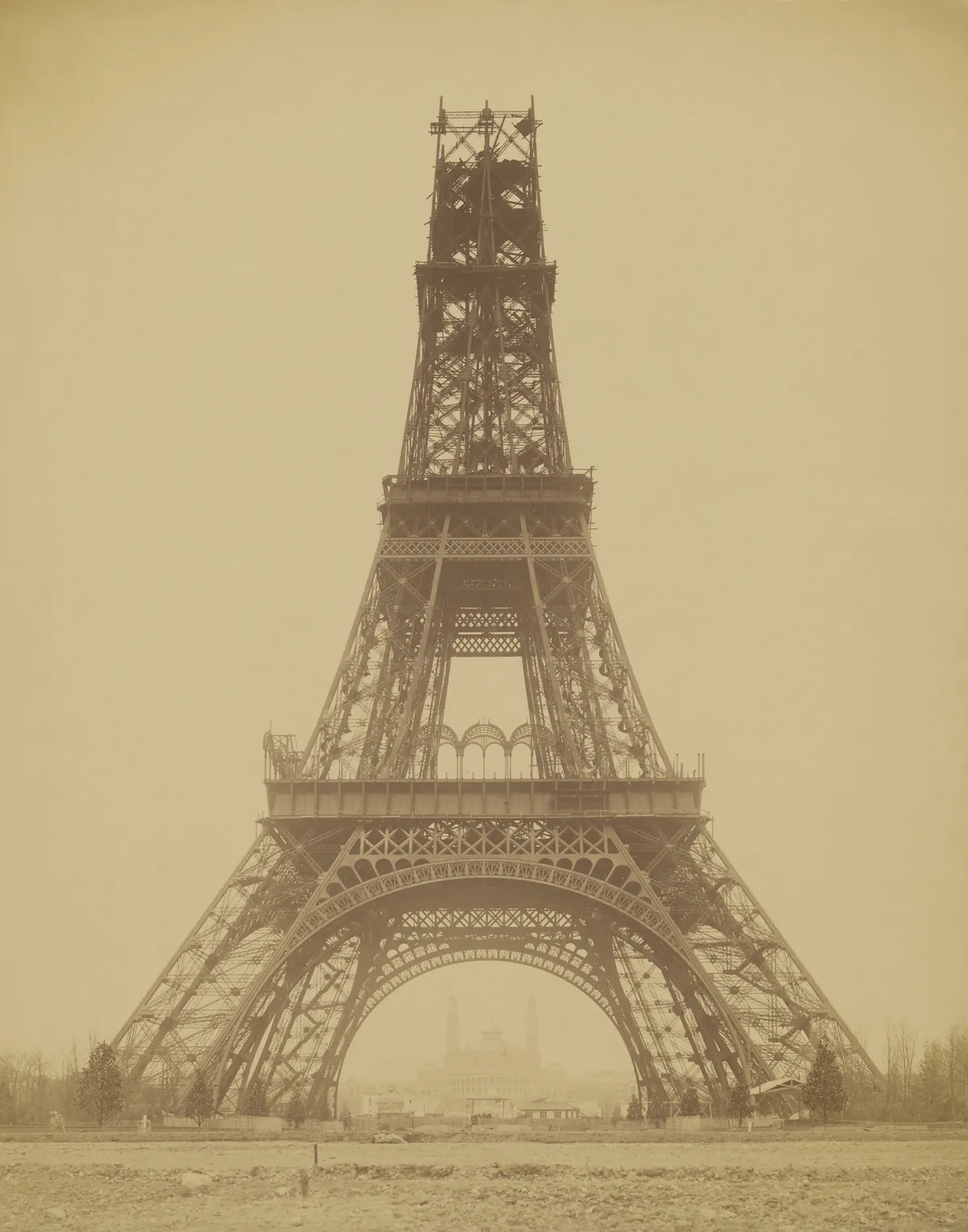
Digging for the foundations began on 26 January 1887. The main assembly of the metalwork started on 1 July 1887 and lasted about 21 months.
The build took two years, two months and five days, and ended on 31 March 1889.
 Watch the ShortThe Eiffel Tower grows
Eighteen thousand parts from one factory
The structure contains 18,038 metal parts, and 5,300 workshop drawings were made for them.
The parts were prepared at Eiffel's factory in Levallois-Perret, on the outskirts of Paris. Each one was individually designed and calculated, with the tracing accurate to a tenth of a millimetre.
The workforce was 50 engineers and draughtsmen, about 150 workers at the factory, and between 150 and 300 workers on the construction site.
To build the first floor, workers used 12 temporary wooden scaffolds 30 metres high and four larger ones 45 metres high.
Rivets, iron and paint
Pieces were first bolted together on site. Most bolts were then replaced with rivets that were fitted hot and tightened as they cooled.
The tower uses 2,500,000 rivets, and only about a third were fitted on site. Each rivet took four men: one to heat it, one to hold it, one to shape the head and one to hammer it.
The structure holds about 7,300 tonnes of iron, and painting it takes 60 tonnes of paint.
The metal is puddled iron, and its steel parts expand at a similar rate.
The tower is repainted every seven years.
It wore reddish brown, yellow and chestnut before the colour known as Eiffel Tower brown was adopted in 1968.
A tower that grows in the heat
Iron expands by about 12 millionths of its length for each degree Celsius, so a one-metre bar grows roughly 12 microns per degree.
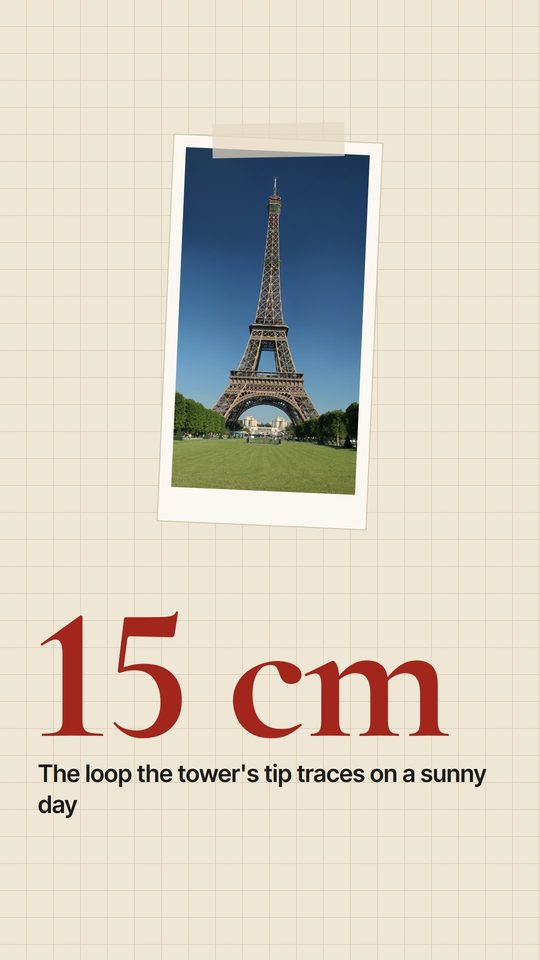
Estimates of the seasonal change differ. Specialists cited by The Conversation put the growth at 12 to 15 centimetres between cold winter days and the hottest summer days, while Smithsonian magazine says a few inches.
Nearly 1,000 feet at the top
At its inauguration in March 1889 the tower stood nearly 1,000 feet (about 300 metres) high, the tallest structure in the world at the time.
A radio antenna added in 1957 raised the tower by 65 feet (about 20 metres).
Sources
- History.com, Eiffel Tower
- The Conversation, The Eiffel Tower gets bigger every summer, here's why
- Google Arts & Culture (Société d'Exploitation de la Tour Eiffel), The Construction of the Eiffel Tower
- Smithsonian Magazine, The Never-Ending Race to Build the World's Tallest Structure
- HyperPhysics, Georgia State University, Thermal Expansion Coefficients at 20 C