Food and drink
Bread
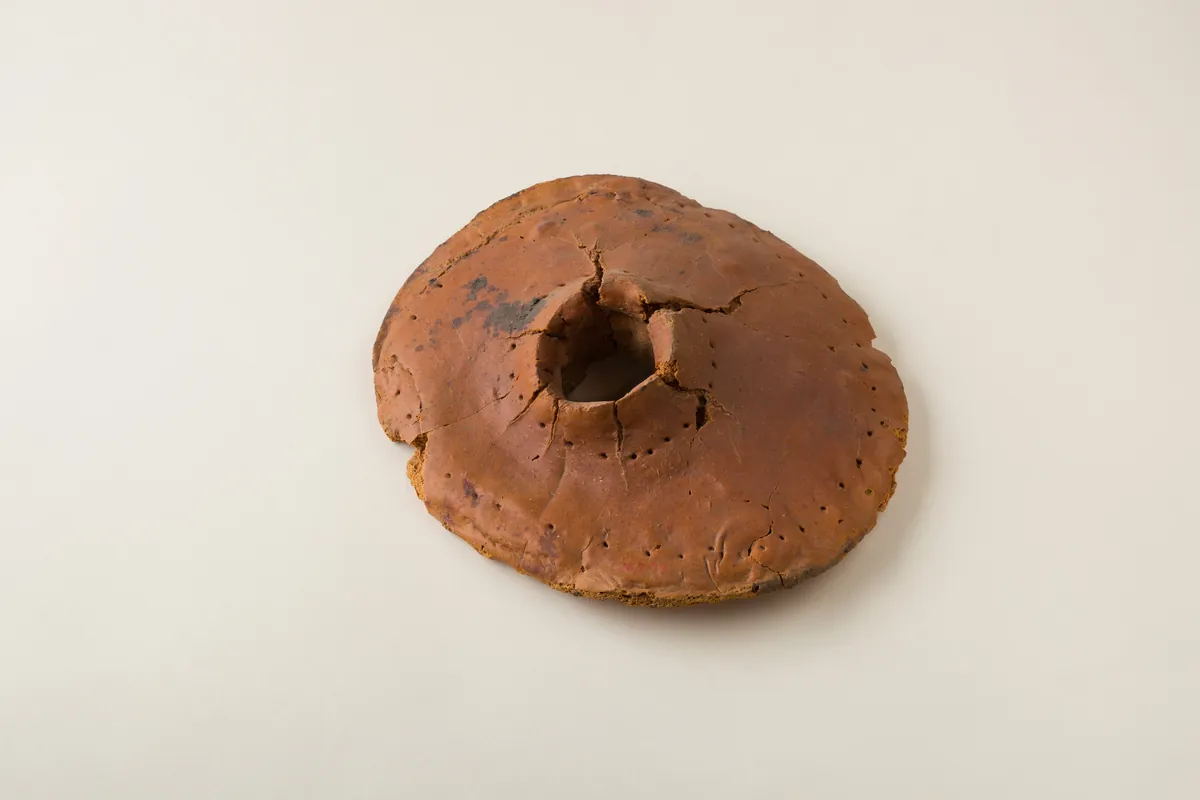
Hunter-gatherers in Jordan baked flatbread about 14,400 years ago, at least 4,000 years before farming began in the region.

At a glance
14,400 years
Age of the charred flatbread from Shubayqa 1, Jordan
4,000 years
Minimum gap between that bread and the start of agriculture
24 remains
Bread-like remains analysed from Shubayqa 1
126.6 pounds
US wheat flour use per person, estimate for 2025
Flatbread before farming
Charred flatbread found at Shubayqa 1, a site in the Black Desert of north-eastern Jordan, is about 14,400 years old. It was baked by Natufian hunter-gatherers.
It is the oldest direct evidence of bread found so far, and it predates the start of agriculture by at least 4,000 years.
Hundreds of charred food fragments were found in the site's fireplaces, and researchers analysed 24 of them. Of those, 22 came from the older fireplace and 2 from the newer one.
The University of Copenhagen excavated the site from 2012 to 2015.
What went into it
The bread was made from the wild ancestors of cereals, including barley, einkorn and oat.
Club-rush tubers were the most common plant remains recovered at the site. Pure club-rush bread would be brittle and crumbly, and wheat flour makes the dough moldable.
The grains were ground, sieved and kneaded before cooking, and dehusking the grain was part of the same labour-intensive process.
Under an electron microscope the pores in the bread are about 0.15 millimetres across and cover about 16% of the sample. That points to a likely unleavened flatbread, like examples from Neolithic and Roman sites in Europe and Turkey.
Yeast in Egyptian loaves
The Egyptologist Delwen Samuel studied about 20 loaves of ancient Egyptian bread with a scanning electron microscope.
The breads were mainly emmer flour, with some barley flour, figs and dates.
A loaf from Hatshepsut's tomb at Deir el Bahri, dated to about 1458 BC, is roughly 3,500 years old.
Yeast occurs naturally in the environment, and the origin of its use in baking is unknown. Some archaeologists think it was discovered by accident, possibly through brewing.
Which wheat for which loaf
In the United States, hard red winter wheat makes up about 40% of production and hard red spring about 25%.
Hard red winter wheat suits pan bread, while hard red spring wheat is prized for hearth breads, rolls, croissants, bagels and pizza crust.
Soft red winter wheat is suited to cookies, crackers, pretzels and pastries, and soft white wheat to cakes, pastries and Asian-style noodles.
Durum wheat is used for pasta, couscous and Mediterranean breads.
How much people eat
The US Department of Agriculture estimates wheat flour use at 126.6 pounds per person in 2025, about 57 kilograms. That is down from a peak of 147 pounds in 1997.
The United States typically produces only about 6 to 7 percent of the world's wheat.
Sources
- University of Copenhagen, Archaeologists discover bread that predates agriculture by 4,000 years
- The Times of Israel, Bread was being baked in Jordan 4,000 years before the start of agriculture
- Scientific American, Our 14,400-year-old relationship with bread
- University College London, 3,500-year-old bread and beer from the New Kingdom, Egypt
- Wheat Foods Council, 6 classes of wheat
- US Department of Agriculture, Economic Research Service, Wheat sector at a glance