Food and drink
Popcorn
The pop is steam escaping about 100 milliseconds after the hull splits, and at 180 °C nearly all kernels go, against about a third at 170 °C.

At a glance
96 %
Kernels popped at 180 °C in one 2015 study
34 %
Kernels popped at 170 °C in the same study
100 milliseconds
Typical delay between the hull cracking and the pop sound
2,900 frames per second
Filming speed for the kernel jumps
6,700 years
Upper age of the oldest corn remains at the Peruvian sites
A seed built to hold pressure
A popcorn kernel holds a little water surrounded by starch, inside a strong, well-sealed outer hull.
As the kernel heats, the sealed water becomes superpressurized and softens the starch. When the hull gives way, steam and starch expand explosively.
Popcorn manufacturers have found that kernels should contain 13 to 14.5 percent moisture to pop well.
Wild teosinte, the ancestor of maize, carries 5 to 12 kernels on an ear, each sealed in a hard casing. Domesticated maize carries hundreds of soft, naked kernels that stay on the cob.
The pop is not the crack
The popping sound comes from the release of water vapour, not from the hull splitting.
The sound typically comes about 100 milliseconds after the kernel cracks open.
The study that showed this was published in the Journal of the Royal Society Interface in February 2015 by Emmanuel Virot, then at the École Polytechnique in Paris, and Alexandre Ponomarenko, a CNRS researcher in Grenoble.
A kernel bursts open, jumps and pops within a few hundredths of a second.
Why kernels leap
Starch bursting from a heated kernel forms a leg-like shape. When it presses on the pan it compresses and releases like a spring, and the kernel somersaults into the air.
The jumps range from a few millimetres to several centimetres high.
The researchers filmed the jumps at 2,900 frames per second. About 400 pieces of popcorn were heated one at a time for the recordings.
How hot is hot enough
In the 2015 study, only 34 percent of kernels popped at 170 °C (338 °F), while about 96 percent popped at 180 °C (356 °F).
The researchers suggested baking popcorn at a fixed oven temperature of 180 °C for a few minutes.
As of 2015, Americans were eating more than 17 billion quarts of popcorn a year.
Popcorn in ancient America
Maize domestication began about 9,000 years ago in Mesoamerica, according to genetic evidence and carbon-14 dating of starch grains and phytoliths from Xihuatoxtla shelter in Guerrero, Mexico.
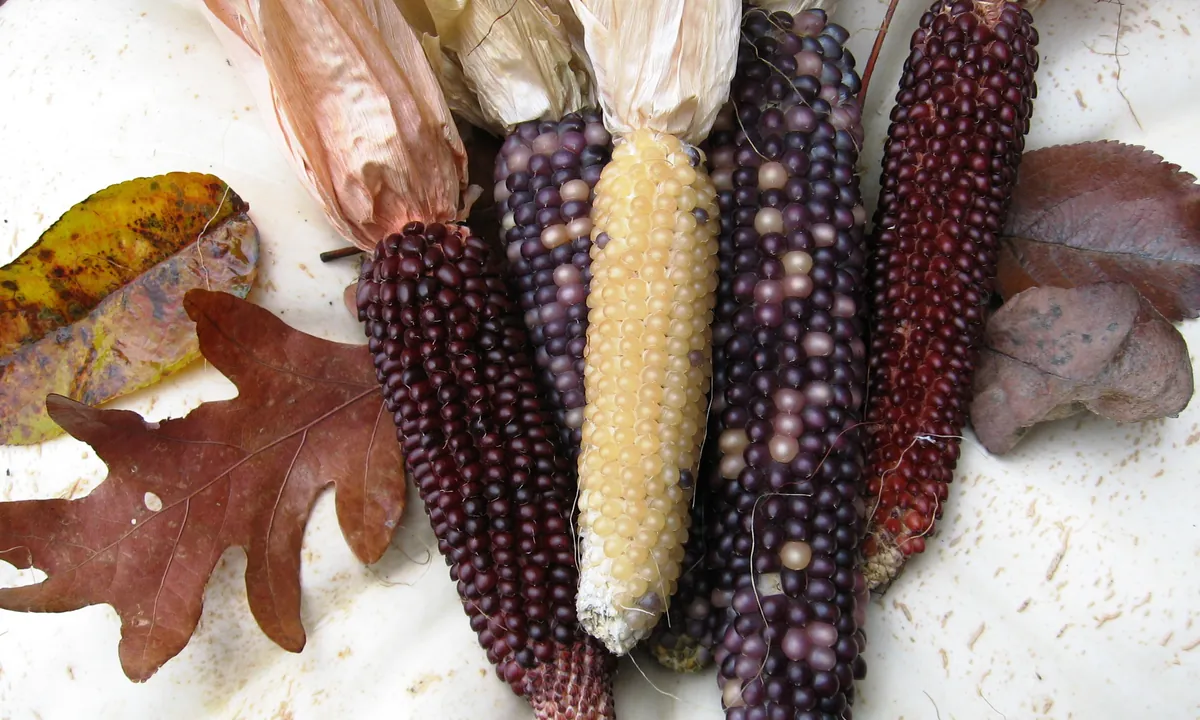
Charred kernels and cob fragments found near Trujillo on the dry northern coast of Peru are at least 6,500 years old, and their size, hardness and popping ability are typical of popcorn varieties.
The Peruvian sites of Paredones and Huaca Prieta yielded corn remains roughly 3,000 to 6,700 years old, reported in the Proceedings of the National Academy of Sciences in January 2012. They predate pottery in the region.
Corn was not yet a major part of the diet at those sites, so the popcorn there was not a staple.
The Bat Cave of west central New Mexico gave up popcorn ears in 1948 and 1950, about 5,600 years old and ranging from smaller than a penny to about 2 inches long.
A popped kernel about 1,000 years old was found in a dry cave in southwestern Utah once inhabited by predecessors of the Pueblo peoples.
Sources
- Scientific American, Popcorn Physics 101: How a Kernel Pops
- NBC News, Scientists reveal the secret acrobatic 'pop' behind popcorn
- Ecological Society of America, Popcorn origins glimpsed in the ruins of antiquity and the greenhouse time machine
- The Royal Society, The science of popcorn
- NBC News, Evidence found for oldest popcorn in South America
- USDA National Agricultural Library, Early History: Popcorn: Ingrained in America's Agricultural History