Food and drink
Bananas
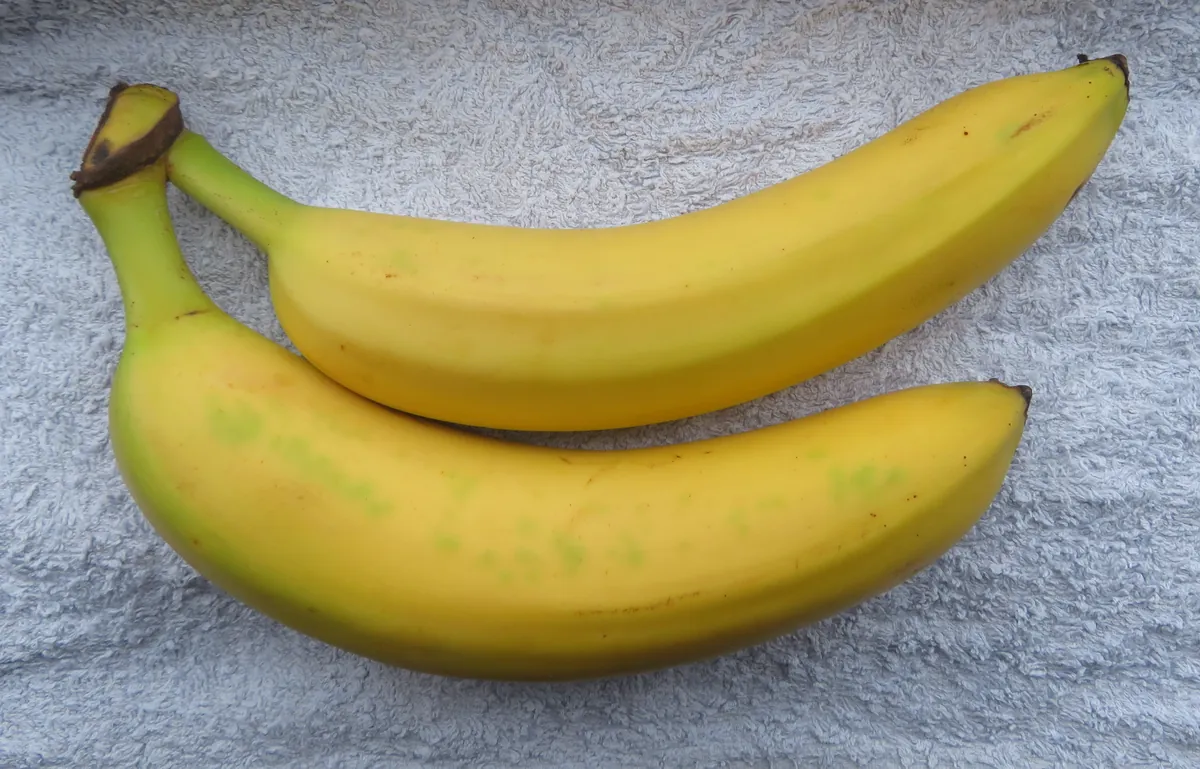
The banana in the shop is not the one that fed the first export trade: Panama disease wiped out the Gros Michel, and the Cavendish replaced it.

At a glance
30,000 hectares
Gros Michel plantations lost in Honduras's Ulua Valley, 1940 to 1960
$400 million
Losses to Panama disease up to 1960
1,000+
Banana varieties
50 kg
Weight a Giant Cavendish bunch may reach
A giant herb, not a tree
The banana plant is a large herb, often wrongly called a tree. Its pseudostem can reach 6 to 7.5 metres.
A bunch of Giant Cavendish bananas may weigh as much as 50 kilograms.
Edible bananas originated in the Indo-Malaysian region, reaching to northern Australia.
Bananas are believed to have reached Europe in the 10th century. Early in the 16th century, Portuguese mariners carried the plant from the West African coast to South America.
More than 1,000 varieties of banana exist.
Commercial bananas are seedless and sterile, which makes it difficult to develop new varieties.
From luxury to the poor man's fruit
Export trade in dessert bananas began in the early 1800s. New York City received 30 bunches of red bananas from Cuba in 1804, and 1,500 bunches from the Caribbean in 1830.
Minor Keith began building railroads in Costa Rica in 1871 and planted bananas alongside the lines. He became known as the Uncrowned King of Central America.
Bananas were first shipped inland, beyond port cities, in the 1880s, and to a country other than the United States, England, in 1896.
Faster steamships, railroads and cableways increased the quantity and quality of fruit and lowered prices. By 1905 bananas had changed from a luxury to the poor man's fruit.
The collapse of the Gros Michel
The first export trades relied almost entirely on a variety called Gros Michel. Its large bunches resist mechanical damage so well that they could be shipped intact.
Gros Michel was extremely susceptible to Panama disease, also called Fusarium wilt, which is caused by a fungus. The disease has no cure.
Between 1940 and 1960, 30,000 hectares were lost to Panama disease in the Ulua Valley of Honduras. In a decade, complete losses were recorded on 4,000 hectares in Suriname and 6,000 hectares at Quepos in Costa Rica.
Losses up to 1960 amount to about $400 million, which is at least $2.3 billion in 2000 figures.
The export trades switched to the Cavendish, which resisted the Panama disease strain that had destroyed Gros Michel. The switch began in the mid-1900s, and MIT dates the replacement to the 1950s.
Cavendish fruit needed far gentler harvesting, handling and shipping than Gros Michel. Hands of fruit are removed from the bunch, delatexed, sprayed with fungicide, boxed and palletized, and usually less than 48 hours pass between harvest and departure from port.
The Cavendish today
As of 2005, more than 100 million tonnes of bananas and plantains were produced each year, and the fruit entering international commerce was worth $5 billion a year.
In the early 1990s serious Panama disease outbreaks struck Cavendish plantations in Sumatra and peninsular Malaysia. A new variant, tropical race 4, was responsible.
Tropical race 4 has since devastated Cavendish plants in parts of Asia, Australia, Africa and the Middle East. Its arrival in the Americas would be catastrophic for the banana industry.
As of 2005, per capita consumption of bananas in Rwanda and Uganda approached 1 kilogram a day.
Sources
- Purdue University, Center for New Crops and Plant Products, Banana
- Food and Agriculture Organization of the United Nations, Bananas
- Massachusetts Institute of Technology, Mass appeal : saving the World's bananas from a devastating fungus
- American Phytopathological Society, Panama Disease: An Old Nemesis Rears its Ugly Head, Part 1: The Beginnings of the Banana Export Trades