Records and extremes
Giant sequoias
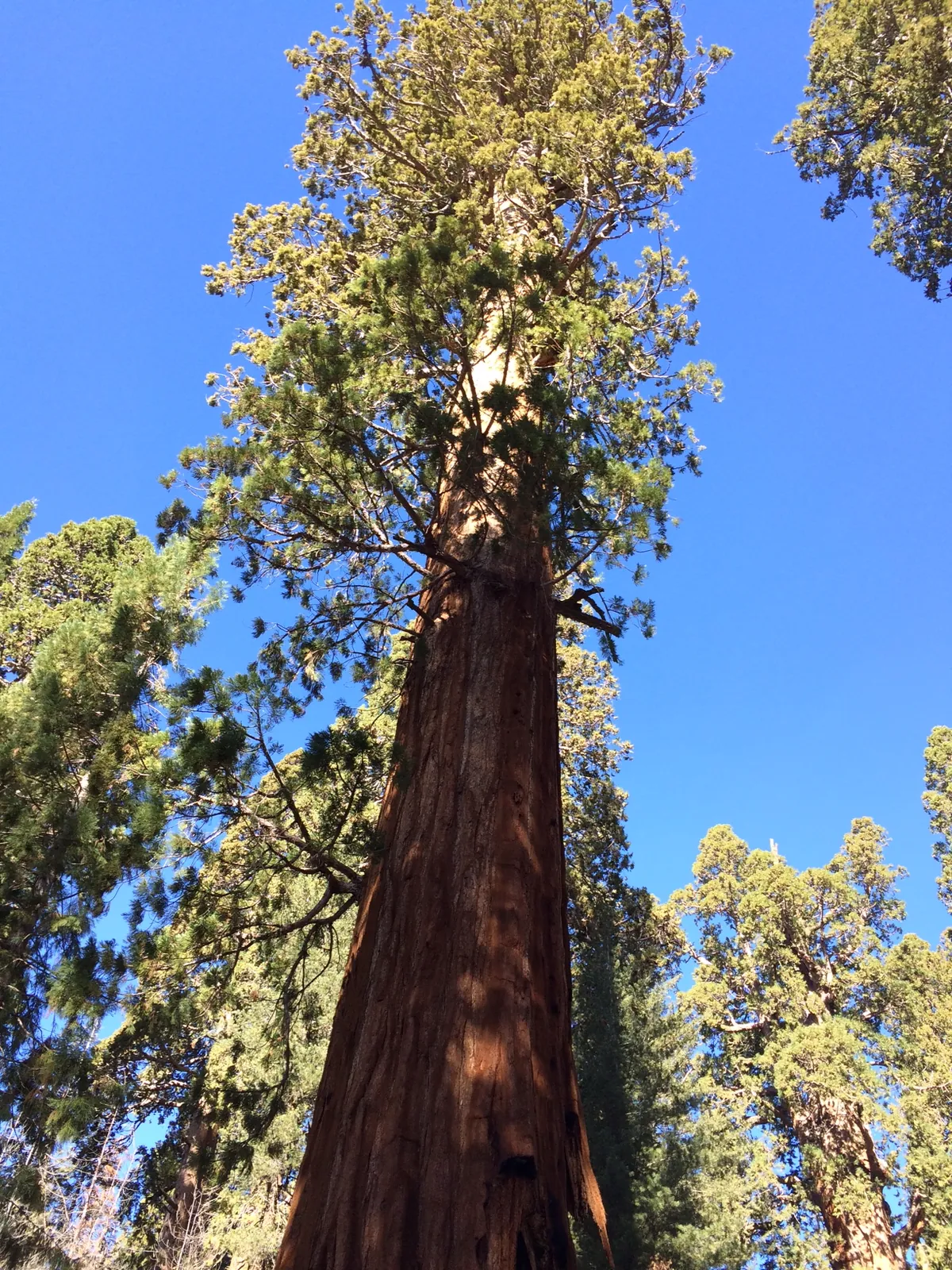
Giant sequoias are the largest trees on Earth by volume: General Sherman holds about 1,487 cubic metres of trunk, and the species grows only in California.

At a glance
1,487 cubic metres
Estimated trunk volume of General Sherman
83.8 metres
Height of General Sherman above its base
420 kilometres
Length of the belt that holds the groves
65 to 75 groves
Number of natural groves, depending on how they are counted
3,200 to 3,266 years
Ages of the oldest known trees, from stump ring counts
General Sherman and its bulk
The General Sherman Tree, in Sequoia National Park, is the largest living sequoia.
Its trunk is estimated to hold about 1,487 cubic metres (52,500 cubic feet) of wood, which makes it the most massive specimen described.
The tree stands 83.8 metres (274.9 feet) above its base.
Measured at the ground, its circumference is about 31 metres.
The trunk alone weighs nearly 1,400 tons, according to the National Park Service.
Big is not the same as tall
Sequoias win on volume, not height. Mature trees average about 76 metres tall, and their diameter above the swollen base commonly runs from 305 to 610 centimetres.
Sources give different figures for the tallest individual: the Forest Service's fire-effects review names the Diamond Tree in Kings Canyon National Park at 87.2 metres, while its Silvics manual gives 94.5 metres as the greatest known height.
The Boole Tree in Converse Basin is 82 metres tall and is the largest tree in America's national forests. It is tied for sixth largest by volume among living sequoias.
One mountain range, a narrow belt
Giant sequoias grow naturally only on the west-facing flanks of California's Sierra Nevada. The National Park Service puts them between 4,000 and 8,000 feet (1,219 and 2,438 metres), while the Forest Service records the lowest natural occurrence at 830 metres and the highest at 2,700 metres.
The natural range is a belt about 420 kilometres long and nowhere more than about 24 kilometres wide, broken into roughly 75 separate groves.
The count depends on the criteria used: the Forest Service's fire-effects review gives 65 to 75 groves.
Park staff distinguish about 40 groves inside Sequoia and Kings Canyon National Parks, ranging from a single tree to tens of thousands.
Giant Forest, on a plateau in Sequoia National Park, is the largest of the unlogged groves and holds more exceptionally large sequoias than any other.
The species sits in a narrow mid-elevation band where about half of the precipitation historically falls as snow. Its current abundance dates back about 4,500 years.
Age, bark and fire
The Forest Service's Silvics manual gives the greatest known age of a giant sequoia as 3,200 years, counted from the rings of a stump. The National Park Service puts the oldest stump in Converse Basin at just over 3,200 years.
The oldest tree dated was logged in the 1870s and was 3,266 years old at death.
Bark can be up to about 80 centimetres thick and averages 25 centimetres on mature trees that are several hundred years old.
A thick, nonresinous bark makes larger sequoias more fire-resistant than the trees that grow around them.
Cones may stay closed on the tree for 20 years or more. Fire is the third and perhaps most important agent of seed release, after a beetle and the Douglas squirrel.
During the drought of 2012 to 2016, 33 sequoias died standing, which the National Park Service links to bark beetles and fire damage at the base of the trees.
Sources
- National Park Service, Exploring Giant Sequoia Groves
- National Park Service, The General Sherman Tree
- US Forest Service, Giant Sequoia
- US Forest Service, Sequoiadendron giganteum, giant sequoia
- National Park Service, Giant Sequoias and Climate
- Rocky Mountain Tree-Ring Research, RMTRR OLDLIST