Earth and weather
Lightning
A lightning channel reaches about 30,000 degrees Celsius, roughly five times the Sun's surface, and the longest flash on record stretched 829 kilometres.
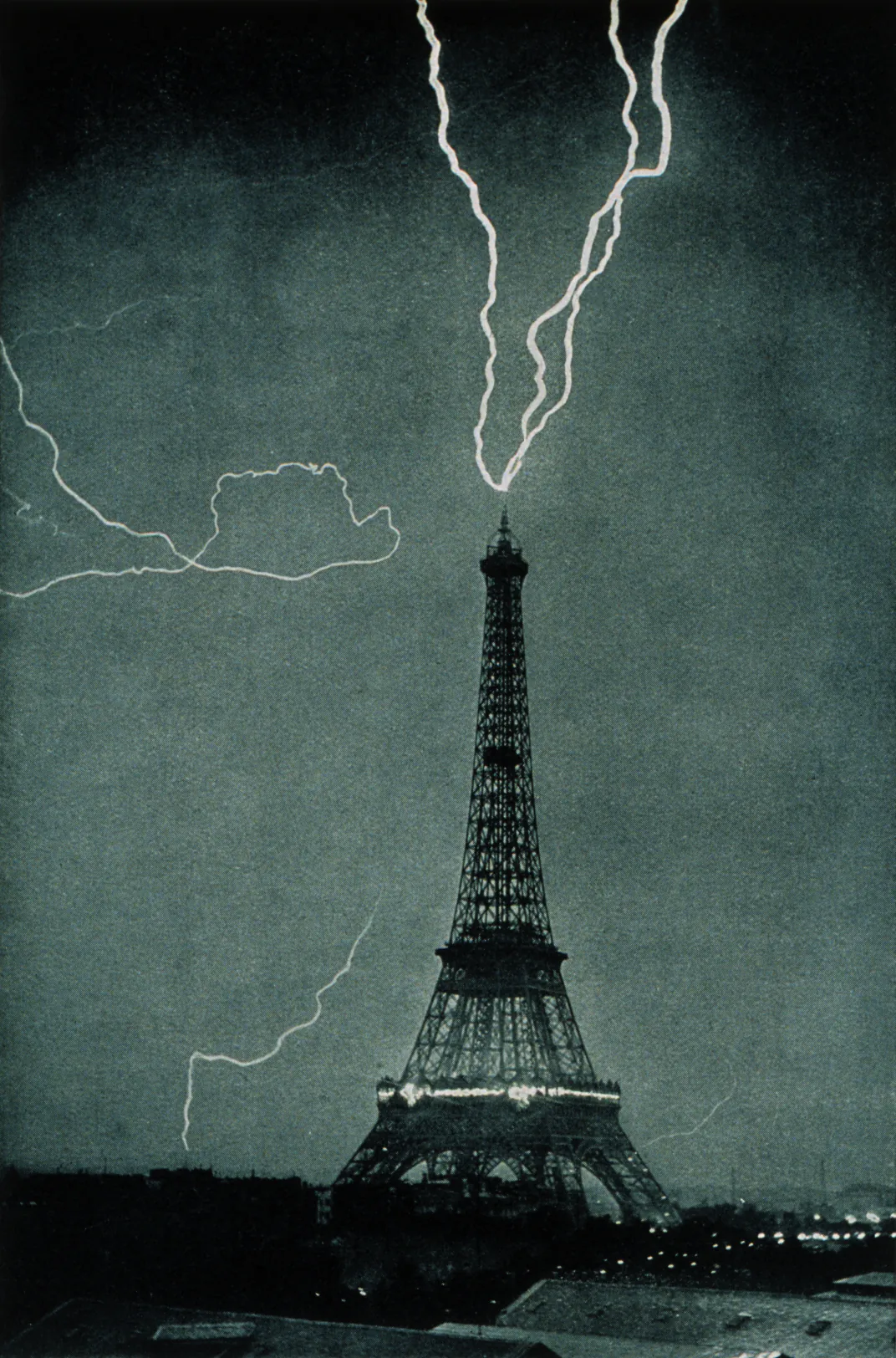

At a glance
30,000 °C
Heat of the air in a lightning channel
5,500 °C
Temperature of the Sun's surface
40 per second
Flashes around the world, NASA satellite research
30,000 amperes
Average peak current of a return stroke
829 km
Longest flash on record, as of July 2025
17.102 seconds
Longest flash by duration, 2020
Five times hotter than the Sun's surface
NOAA puts the heat of a lightning bolt at as much as 30,000 degrees Celsius (54,000 degrees Fahrenheit), about five times the temperature of the Sun's surface. The National Severe Storms Laboratory says the air in the channel is heated to above 50,000 degrees Fahrenheit.
The Sun's visible surface is about 5,500 degrees Celsius (10,000 degrees Fahrenheit). Its core is far hotter, at about 15 million degrees Celsius, so the comparison holds only for the surface.
The return stroke heats the air in the channel in only a few millionths of a second.
Air heated that fast expands explosively and compresses the air around it into a shock wave similar to a sonic boom.
The shock wave weakens into an ordinary sound wave within about 10 yards (9 metres) of the channel, and that sound wave is thunder.
Sound covers about one third of a kilometre each second, so counting the seconds between a flash and its thunder and dividing by three gives the distance to the lightning in kilometres.
NOAA says thunder is normally audible up to about 16 kilometres away, while the National Severe Storms Laboratory says it can be heard as far as 40 kilometres.
How a flash builds
Charge separates inside a storm when soft ice pellets called graupel collide with smaller ice particles and each takes on an opposite charge. The smaller ice rises faster in the updraft, which carries its charge above the graupel's.
A channel then forms downward from the cloud in steps, each about 50 metres (160 feet) long and lasting about a microsecond. The whole leader takes about 50 milliseconds to reach its full length.
A leader carries roughly 100 million volts relative to the ground. The National Severe Storms Laboratory gives a range for lightning of 100 million to 1 billion volts.
When the leader is within roughly 100 yards of the ground, objects send up sparks to meet it.
Once a spark connects, a huge current surges up the channel. The return stroke peaks at an average of around 30,000 amperes, reached in about 1 microsecond.
Counting the flashes
NASA satellite research puts the global rate at about 40 lightning flashes every second. A 2003 analysis of satellite data gave 44, and the rate ranges from about 35 per second in the Northern Hemisphere winter to about 55 in summer.
An average of 20 million cloud-to-ground flashes a year have been detected in the contiguous United States.
The National Weather Service counts about 25 million lightning flashes a year in the United States.
At least 30 million points on the ground are struck in the United States in an average year.
Flashes that cross states
As of July 2025, the longest lightning flash on record is 829 kilometres (515 miles), give or take 8 kilometres. It ran from eastern Texas to near Kansas City on 22 October 2017.
The World Meteorological Organization certified the record on 31 July 2025. The flash was missed in the first analysis of the 2017 storm and found when the storm was re-examined using data from NOAA's GOES-16 satellite.
It beat a record of 768 kilometres set by a flash across parts of the southern United States on 29 April 2020, by 61 kilometres.
Before that, the record was 709 kilometres, across southern Brazil on 31 October 2018.
The longest flash by duration lasted 17.102 seconds, developing continuously through a thunderstorm over Uruguay and northern Argentina on 18 June 2020. The previous record was 16.73 seconds, over northern Argentina on 4 March 2019.
These records came from space-based Geostationary Lightning Mappers on the GOES-16 and GOES-17 satellites, which can measure flashes continuously over large areas.
Sources
- NOAA, Sound of Thunder
- NOAA National Severe Storms Laboratory, Severe Weather 101: Lightning FAQ
- NASA, Sun Facts
- NOAA National Severe Storms Laboratory, Severe Weather 101: Lightning Basics
- NOAA, JetStream Max: The Lightning Process: Keeping in Step
- NOAA, Lightning
- NASA, Global frequency and distribution of lightning as observed from space by the Optical Transient Detector
- NASA Earthdata, Lightning
- US National Weather Service, Lightning Science Overview
- World Meteorological Organization, WMO certifies megaflash lightning record in USA
- American Meteorological Society, A New WMO-Certified Single Megaflash Lightning Record Distance: 829 km (515 mi) Occurring on 22 October 2017
- World Meteorological Organization, WMO certifies two megaflash lightning records
- American Meteorological Society, New WMO Certified Megaflash Lightning Extremes for Flash Distance and Duration Recorded from Space